
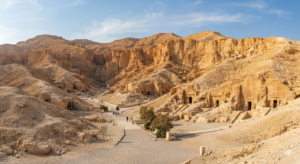
Nestled in the heart of Luxor, Egypt, lies the historic Valley of the Kings. Indeed, this enigmatic burial ground is steeped in centuries-old secrets. Situated on the west bank of the Nile River, this ancient cemetery served as the final resting place for pharaohs of the New Kingdom era. As we journey through time, we delve into the Valley’s rich history, remarkable architecture, and intriguing artifacts. These elements continue to captivate a global audience today.
Unveiling the History of the Valley of the Kings
The captivating history of the Valley of the Kings traces back to the New Kingdom period, spanning from 1600 BC to 1100 BC. Specifically, priests chose this sacred Valley for pharaohs, nobles, and prominent figures. They selected it primarily for its remote location, which provided a natural defense against grave robbers.
Sheltered by natural barriers, these hallowed grounds have preserved Egypt’s elite for millennia. Furthermore, the Valley of the Kings serves as a lasting testament to the grandeur and complexity of ancient Egyptian society during the New Kingdom era.
Architectural Marvels and Design
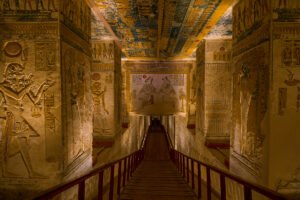
The construction of tombs within the Valley of the Kings exemplifies exceptional ancient engineering and artistic skills. Artisans meticulously carved these tombs directly into the rock faces of the Valley. Consequently, they feature complex tunnels and chambers leading to deep underground burial rooms.
Adorning the tomb walls are vibrant paintings and hieroglyphic inscriptions. These artworks depict religious rituals, mythological scenes, and the pharaoh’s sacred journey into the afterlife.
Exploring the Tombs of Pharaohs
1. Tutankhamun’s Tomb
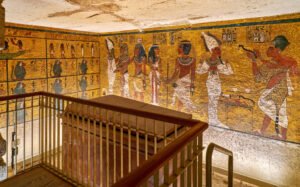
Howard Carter discovered Tutankhamun’s burial chamber in 1922. Subsequently, it quickly became an iconic tomb in the Valley of the Kings and captured the world’s imagination. Laden with treasures and artifacts, it notably houses the famous golden mask adorning the mummy of the young pharaoh.
2. Ramses II’s Tomb
As one of Egypt’s most influential pharaohs, Ramses II chose the Valley of the Kings as his eternal resting place. Known as KV7, his tomb in Luxor boasts immense grandeur and architectural complexity. Furthermore, the tomb’s walls feature reliefs and hieroglyphs portraying scenes from his life, military conquests, and religious ceremonies. As a result, these artworks provide a vivid glimpse into his powerful reign and ancient Egyptian artistic prowess.
3. Seti I’s Tomb
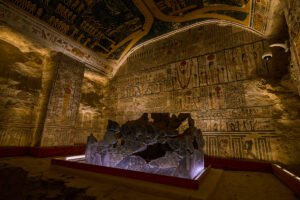
Seti I, an eminent pharaoh of the New Kingdom, selected the Valley of the Kings for his final abode. Known as KV17, his tomb stands as an architectural masterpiece adorned with intricate details that reflect his era’s grandeur. Additionally, the tomb’s walls feature murals and reliefs depicting mythology, religious rites, and royal life. Thus, it offers a captivating journey through ancient Egyptian history.
4. Tomb of Hatshepsut
The Tomb of Hatshepsut, also called KV20, remains one of the most renowned tombs in the Valley. As a significant pharaoh in ancient Egypt, Hatshepsut chose this sacred location for her final resting place. Today, the tomb showcases distinctive architectural and design elements from her rule. Its corridors feature exquisite reliefs depicting scenes from her life and reign. Consequently, these scenes shed light on the innovative use of art and symbolism in ancient funeral rituals.
Unearthing the Secrets of the Tombs
The tombs within the Valley of the Kings conceal numerous secrets. Thus, they offer deep insights into the beliefs, lifestyle, and thought processes of ancient Egypt. Detailed wall paintings, hieroglyphic inscriptions, and hidden chambers have intrigued archaeologists for centuries.
These secrets unravel the complexities of Egyptian religion and funerary practices. In doing so, they illuminate ancient perceptions of the afterlife and the pharaoh’s eternal journey. Therefore, exploring these tombs provides a fascinating window into a timeless civilization.
Preservation Efforts in the Valley of the Kings
Protecting the fragile tombs and artifacts within the Valley of the Kings is paramount. For this reason, the Egyptian government works closely with international organizations. Together, they invest significant resources to preserve this invaluable archaeological site.
Stringent rules and regulations now ensure the long-term protection of these historic tombs. Furthermore, conservation teams employ advanced techniques to safeguard structures, prevent deterioration, and minimize environmental impact. Ongoing restoration projects and careful maintenance remain instrumental in preserving these priceless treasures for future generations.
Unearthed Treasures: Artifacts and Relics
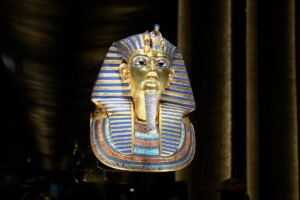
The Valley of the Kings has yielded a wealth of treasures and artifacts. These discoveries provide invaluable insights into the culture and beliefs of ancient Egypt. Within these sacred tombs, archaeologists have found statues, masks, amulets, and crafted papyrus scrolls. Ultimately, these findings have deepened our understanding of religion, art, and social life during the New Kingdom period.
Mysteries and Legends of the Valley of the Kings
The Valley of the Kings is steeped in legendary tales, ranging from ancient curses to unsolved enigmas. Consequently, it continues to intrigue explorers and archaeologists worldwide. Speculation abounds regarding undiscovered tombs and hidden chambers within known graves. This ongoing search adds an enduring air of mystery to the historic site.
Modern-Day Tourism
Today, the Valley of the Kings draws visitors from across the globe who are eager to witness ancient wonders. Guided tours offer the opportunity to explore numerous open tombs and hear captivating historical stories. Indeed, walking the same hallways as ancient pharaohs is an awe-inspiring experience that transports visitors through time.
Exploring the Valley of the Kings
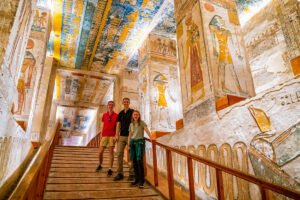
Exploring the Valley of the Kings in Luxor is a remarkable journey through ancient Egyptian history. As visitors step into this sacred burial ground, they enter a bygone era surrounded by magnificent structures and artwork. Guided tours unravel the fascinating narratives of the tombs, revealing royal luxury and grandeur.
Meanwhile, vibrant murals and hieroglyphic inscriptions evoke a sense of wonder and reverence. Ultimately, the Valley stands as a living testament to an extraordinary culture that continues to preserve the secrets of its pharaohs.
Valley of the Kings: A Timeless Legacy
The Valley of the Kings stands as a lasting testament to the grandeur and ingenuity of ancient Egypt. Its tombs, art, and archaeological discoveries continue to educate us about the lives of pharaohs and their subjects. With a history spanning millennia, this site inspires curiosity and beckons visitors to learn more about a remarkable era.
Practical Tips for Visitors

For those planning to explore the Valley of the Kings, consider the following helpful tips:
-
Wear comfortable and sturdy footwear suitable for walking and climbing.
-
Protect yourself from the sun with sunscreen and a hat. Additionally, stay hydrated with ample water.
-
Adhere strictly to the rules and directions provided by your tour guide and site staff. This ensures your safety and the preservation of the tombs.
-
Consider hiring a knowledgeable guide to gain deeper insights into the historical and cultural significance of the site.
-
Please respect ancient artifacts and refrain from touching or damaging them.
-
Capture the beauty of the artwork through photography while remaining considerate of other visitors.
In Conclusion
The Valley of the Kings in Luxor holds immense historical and cultural importance. Consequently, it provides a vital gateway to understanding ancient Egyptian civilization. Its rich history, architectural marvels, and invaluable artifacts continue to educate and captivate visitors worldwide.
A journey through this sacred burial ground offers a unique opportunity to explore a culture that left an indelible mark on human history. Therefore, plan your expedition to the Valley of the Kings today, and embark on an unforgettable voyage through time.
Read more related articles: