

The Kom Ombo Temple, also known as the “Temple of Sobek and Horus,” is a unique dual temple. It honors two ancient Egyptian deities: Sobek, the crocodile-headed god, and Horus, who features the head of a falcon. Nestled in the Aswan Governorate along the banks of the Nile River, this architectural marvel highlights the ingenuity of ancient Egyptian builders. Furthermore, the Kom Ombo Temple comprises a collection of ancient structures. It holds immense significance in Egypt’s culture, drawing visitors from all over the world. Join us as we explore its rich historical tapestry, architectural grandeur, and captivating stories.
Unveiling the Past: Historical Origins of Kom Ombo Temple
The roots of the Kom Ombo Temple reach back to the Ptolemaic era, around the 2nd century BC. However, the site’s history extends even further, showcasing remnants from the New Kingdom era. Over time, successive rulers left their mark on the complex. Consequently, their contributions enriched this sacred structure through various ages.
The Ptolemaic pharaohs built this splendid edifice to honor and appease the gods Sobek and Horus. Today, the complex stands as a profound testament to ancient Egyptian religious practices and exceptional architectural prowess.
Architectural Wonders: The Design and Structure of Kom Ombo Temple
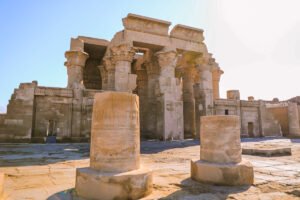
The design of Kom Ombo Temple relies on the traditional style of Egyptian temples, renowned for grand scales and intricate details. However, what sets this temple apart is its dual nature. Builders constructed two identical sections dedicated to Sobek and Horus.
This symmetrical layout distinguishes it from other ancient Egyptian sites. Specifically, it boasts grand entrance gates, expansive courtyards, and a hall adorned with exquisitely carved columns. Furthermore, artisans decorated the temple walls with hieroglyphic inscriptions and symbolic reliefs depicting religious rituals. Ultimately, Kom Ombo Temple never fails to astonish visitors with its precision and beauty.
The Dual Deities: Sobek and Horus at Kom Ombo Temple
One of the most captivating aspects of Kom Ombo Temple is its complete duality. Split into two equal and symmetrical sections, each part honors one god—Sobek or Horus. Sobek, featuring the head of a crocodile, symbolizes fertility and protection. Conversely, Horus, the falcon-headed god, embodies royal power and kingship.
This architectural choice vividly illustrates the contrasting natures of these deities. By exploring Kom Ombo Temple, visitors witness two distinct sanctuaries. As a result, they gain deeper insights into the complex spiritual perspectives of the ancient Egyptians.
The Grandeur of the Hypostyle Hall

Upon entering Kom Ombo Temple, visitors encounter the magnificent hypostyle hall. This room serves as a true architectural masterpiece. Furthermore, the gallery features towering columns with intricate carvings and hieroglyphics.
Notably, the celestial depictions on the ceiling underscore the ancient Egyptians’ keen interest in astronomy. The sheer scale of the hall transports visitors directly into an era of grand religious ceremonies. Thus, the hypostyle hall stands as a prime example of ancient Egyptian skill and creativity.
The Sacred Crocodile: A Symbol of Sobek at Kom Ombo

In the vicinity of Kom Ombo Temple, the Nile crocodile held a sacred status in ancient times. Within the temple grounds, priests revered a holy crocodile as the earthly embodiment of Sobek. Consequently, temple priests accorded the creature the utmost respect, treating it as a living deity.
The presence of mummified crocodiles within the complex underscores the reverence ancient Egyptians held for these creatures. Therefore, the sacred crocodile exemplifies how ancient society intertwined religious beliefs with deep respect for the natural world.
Religion and Healing: Kom Ombo Temple’s Role in Medicine
Kom Ombo Temple held a pivotal role in religious rites and healing ceremonies. Specifically, the temple priests possessed renowned medical expertise. Artisans reflected this tradition directly on the temple walls, carving representations of surgical instruments and medical procedures. This unique feature highlights the temple’s historical significance as a major center for healing.
Mythology in Stone: Kom Ombo Temple’s Mythological Significance
Kom Ombo Temple holds immense importance in ancient Egyptian mythology. A prominent tale tells of Horus seeking retribution against his uncle Seth for the murder of his father, Osiris. Inscriptions and reliefs within the temple walls vividly depict this classic myth.
Furthermore, the narrative underscores the ancient belief in a perpetual battle between good and evil, order and chaos. By exploring these halls, visitors can fully immerse themselves in captivating ancient Egyptian legends.
The Art of Healing: Kom Ombo Temple and Ancient Egyptian Medicine
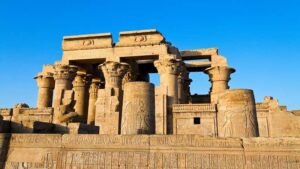
The connection between Kom Ombo Temple and ancient medicine remains a fascinating aspect of its history. Wall reliefs depict various medical tools and surgical procedures. Consequently, these carvings suggest that priests played a pivotal role in providing healthcare. In fact, historians believe that aspiring doctors in antiquity received their formal medical training right here at Kom Ombo.
Symbolism and Inscriptions: Decoding the Mysteries
The walls and columns of Kom Ombo Temple showcase detailed hieroglyphic inscriptions and symbol-laden imagery. Together, they create a rich tapestry of meaning and symbolism. Hieroglyphs narrate stories of ancient religious customs, daily rituals, and timeless myths.
Within the temple, sacred symbols like the ankh, the eye of Horus, and the lotus flower represent life, protection, and rebirth. These inscriptions provide profound insights into ancient spirituality. By deciphering these symbols, visitors gain a deep appreciation for ancient Egyptian art and religion.
Preservation and Restoration: Safeguarding Kom Ombo Temple
Over the centuries, Kom Ombo Temple has weathered time and human activity. However, conservationists have made concerted efforts to preserve this ancient landmark for future generations. Ongoing restoration initiatives aim to safeguard structural integrity, protect delicate carvings, and maintain historical significance.
Expert archaeologists, artisans, and preservationists collaborate meticulously to repair damaged areas. By investing in the preservation of Kom Ombo Temple, we safeguard an invaluable piece of human history.
Kom Ombo Temple in Popular Culture: A Source of Inspiration
Artists, writers, and filmmakers have long admired the enigma and history of Kom Ombo Temple. Consequently, the temple has found a prominent place in books, movies, and documentaries. This presence in popular culture helps raise global awareness of its archaeological importance.
Authors weave the temple’s timeless ambiance into their stories to add adventure to their narratives. Similarly, filmmakers utilize the stunning backdrop to transport audiences into ancient Egypt. Thus, Kom Ombo Temple continues to serve as an enduring source of creative inspiration.
Rediscovering Ancient Egypt: A Visit to Kom Ombo Temple
Today, travelers can journey to Kom Ombo Temple to explore its physical wonders and unravel its storied past. The temple complex offers a clear window into ancient culture, where grand architecture and spiritual beliefs converged seamlessly.
Reaching Kom Ombo Temple: Your Path to History

To reach Kom Ombo Temple, travelers can fly directly into Aswan International Airport, which serves as the closest access point. From there, visitors can easily reach the site by road or water. Furthermore, various transportation options, such as taxis, river cruises, and guided tours, facilitate an enjoyable and hassle-free trip.
In Conclusion: Kom Ombo Temple’s Timeless Grandeur
Kom Ombo Temple stands as a clear testament to the grandeur and sophistication of ancient Egypt. Its distinctive dual architecture, rich history, and religious significance make it a must-visit destination for travelers.
By examining intricate carvings, deciphering ancient hieroglyphs, and exploring historic halls, visitors gain a deeper understanding of ancient beliefs. Ultimately, a visit to Kom Ombo Temple offers an unforgettable journey into the heart of Egyptian civilization.
Read more related articles: