
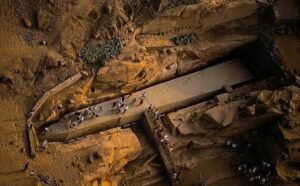
Obelisks have always fascinated people due to their grandeur and symbolism. Indeed, these towering structures, which artisans carved from a single block of stone, served as powerful symbols of ancient societies’ might and influence. Had workers completed the Unfinished Obelisk, it would have been the tallest Obelisk ever, reaching a staggering height of approximately 137 feet (42 meters). Furthermore, the pharaohs of ancient Egypt held obelisks in special reverence and crafted them to signify their divine connection with the gods. For instance, people believed that these skyward-pointing obelisks acted as conduits for the sun god Ra’s energy and blessings to flow down to the land.
The craftsmanship and engineering expertise required to create these massive stone monuments were exceptional. Specifically, skilled artisans meticulously carved and shaped granite and other types of stone to fashion obelisks with precise dimensions. Artisans then adorned these surfaces with intricate hieroglyphic inscriptions, narrating stories of the pharaoh’s accomplishments, offering tributes to the gods, and securing the king’s eternal legacy. Consequently, the beauty of obelisks stands as a testament to the remarkable skills of ancient civilizations and serves as a lasting legacy of their rich culture. Ultimately, these impressive structures continue to captivate and inspire, reflecting the ingenuity and creativity of the past.
The Aswan Quarry: Birthplace of Monuments
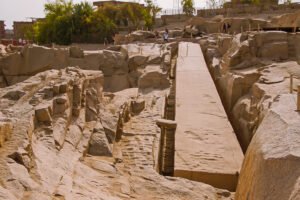
The Aswan Quarry, situated near the Nile River, served as the primary source of granite when ancient Egyptians constructed their monumental edifices. Moreover, this quarry provided the stone for crafting obelisks, statues, and temples, among other structures. In particular, the Unfinished Obelisk, still embedded in the bedrock, offers a unique opportunity to witness ancient Egyptian quarrying techniques.
The : A Monumental Undertaking
Workers initiated the formidable task of hewing the Unfinished Obelisk out of the bedrock in the Aswan Quarry under the reign of Hatshepsut, who was one of ancient Egypt’s most powerful pharaohs. However, an unexpected challenge arose during the project’s execution.
The Mystery of Abandonment
While artisans meticulously carved the granite, a significant crack materialized, rendering the Obelisk unusable. As a result, facing an insurmountable problem, ancient artisans abandoned the Obelisk in its original location. Nevertheless, the presence of the Unfinished Obelisk serves as a valuable archaeological and historical artifact, shedding light on ancient Egyptian quarrying and construction techniques.
Understanding Unfinished Obelisk Construction Techniques
Furthermore, the Unfinished Obelisk provides an illuminating glimpse into the step-by-step process of obelisk creation. First, ancient artisans delineated the pyramid shape on the rock using chalk or charcoal. Subsequently, they meticulously sculpted the stone using tools such as diorite beating balls and copper chisels.
The Unfinished Obelisk’s Specifications
Had workers completed the Unfinished Obelisk, it would have possessed a weight of approximately 1200 tons, with each of its sides measuring around 13 meters (42 feet) in length. Therefore, these dimensions underscore the monumental nature of the project and highlight the precision and expertise of ancient builders.
The Geological Significance of Unfinished Obelisk
In addition, geologists can extract valuable insights from the Unfinished Obelisk. For example, the pink and gray bands visible in the granite provide clues about the stone’s various stages of solidification. By studying these bands, scientists can gain a deeper understanding of geological processes that transpired in the Earth’s crust millions of years ago.
The Role of Unfinishs: Modern-Day Discoveries
Meanwhile, contemporary archaeologists have made noteworthy discoveries while examining the Unfinished Obelisk, striving to unravel its enigmatic past. Through meticulous analysis, they have gained insights into ancient quarrying techniques, tools employed, and the reasons behind the project’s abandonment. Consequently, these findings continue to enhance our understanding of ancient Egyptian craftsmanship.
Preserving the Unfinished Obelisk
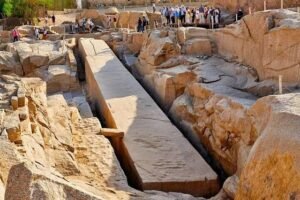
Currently, authorities are undertaking efforts to preserve the Unfinished Obelisk, ensuring its longevity for future generations. For instance, workers have installed protective coverings to shield its surface from weathering and environmental effects. In addition, the site serves as an open-air museum, allowing people to marvel at the remarkable engineering prowess of ancient Egypt.
The Unfinished Obelisk: A Window to the Past
Indeed, the Unfinished Obelisk attests to the intelligence and diligence of ancient Egyptians, offering a remarkable illustration of their architectural accomplishments. Thus, this colossal monument provides a window to the past, imparting invaluable insights into a bygone era.
Uncovering the Historical Significance
Furthermore, the Unfinished Obelisk serves as a tangible reminder of the pharaohs’ greatness and ambition, as well as the immense dedication of skilled artisans who toiled for years to construct monumental structures. Therefore, its location in Aswan stands as a testament to the rich history and enduring legacy of this ancient civilization.
Exploring the Unfinished Obelisk’s Symbolism
In ancient Egyptian belief systems, obelisks held profound symbolism, serving as conduits between the realm of humans and that of the gods. Specifically, ancient Egyptians designed these structures to resemble the sun god Ra, believing they could harness the sun’s power and disseminate it across the land. Thus, even in its unfinished state, the Unfinished Obelisk retains its symbolic significance, prompting contemplation of ancient Egyptian spiritual beliefs.
Modern-Day Implications
Additionally, the Unfinished Obelisk bears historical, cultural, and contemporary significance. On one hand, it attracts tourists worldwide, bolstering local businesses and promoting cultural exchange. On the other hand, ongoing archaeological and scientific research continues to advance by studying the Obelisk’s geology and construction methods.
The Unfinished Obelisk’s Influence on Art and Architecture
Likewise, artists and architects have drawn inspiration from the grandeur and allure of the Unfinished Obelisk for generations. Consequently, its timeless magnificence appears in various artistic mediums, including paintings, sculptures, and architectural designs. Ultimately, the enduring mystique of the Unfinished Obelisk ensures its legacy endures through the realm of art.
Preserving the Unfinished Obelisk for Future Generations
Preservation efforts are vital to safeguard the Unfinished Obelisk’s historical and cultural value and to ensure future generations can access it. Therefore, authorities continuously implement maintenance measures, including the upkeep of protective coverings and the mitigation of weather-related damage. As a result of preserving this incredible landmark, we perpetuate its educational and cultural significance.
Conclusion
In conclusion, the Unfinished Obelisk stands as a testament to the remarkable achievements of ancient Egyptians and their unwavering determination to transform grand visions into reality. Its immense size, historical importance, and symbolic power make it a captivating attraction for tourists and scholars alike. Above all, the Unfinished Obelisk serves as a reminder of the extraordinary accomplishments of ancient societies, inspiring awe and admiration. As our understanding of this monumental relic deepens, it continues to underscore human ingenuity and resilience.
Related FAQs to Unfinished Obelisk
-
What is the Unfinished Obelisk?
The Unfinished Obelisk is an ancient structure in Aswan, Egypt, which workers never completed due to a significant crack in the granite.
-
Why was the Unfinished Obelisk abandoned?
Artisans left the Unfinished Obelisk incomplete when they discovered a substantial crack during carving, rendering it unusable.
-
How tall would the Unfinished Obelisk have been if completed?
The Unfinished Obelisk would have reached a height of approximately 137 feet (42 meters), making it one of the tallest obelisks ever constructed.
-
What is the significance of obelisks in ancient Egypt?
In ancient Egypt, obelisks held great cultural and religious importance. Specifically, people considered them representations of the sun god Ra and frequently placed them in pairs on either side of temple entrances. The hieroglyphs inscribed on obelisks served as prayers and praises to the gods, ensuring perpetual protection and honor for the king.
-
Can visitors see the Unfinished Obelisk?
Yes, the public can access the Unfinished Obelisk, which serves as an open-air museum allowing people to witness ancient Egypt’s remarkable engineering achievements.
-
How were obelisks transported and erected?
The transportation and erection of obelisks were monumental undertakings. Consequently, ancient Egyptians employed sleds, ramps, and human and animal labor to move and install these massive structures.
Read more related articles: